In Conversation: Textiles and Fashion

The Goldsmiths Fashion Research Unit, Special Collections & Archives and The Design Department invite you to:

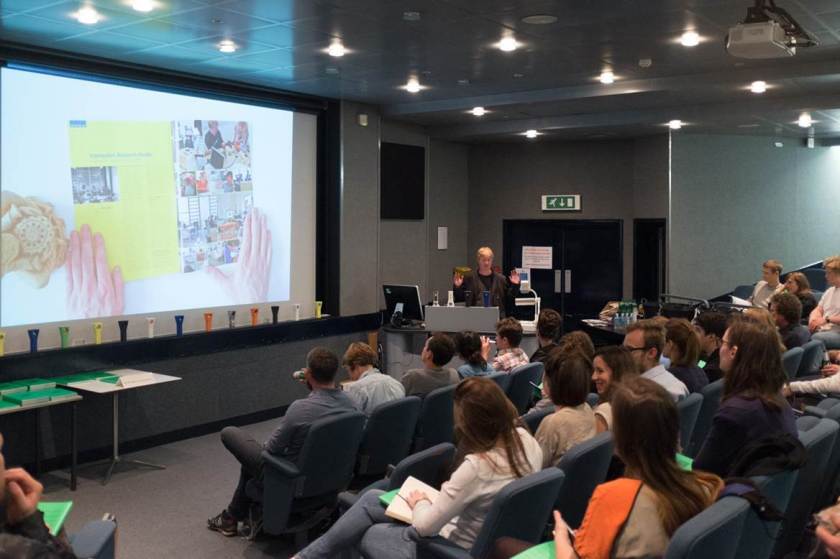
In Conversation Textiles and Fashion: Rose Sinclair with Philip Richards, Mo Tomaney and Dr Julia Gaimster.

Tuesday 30th June 2015, 6.00pm-8.00pm

Venue: Special Collections & Archives, Goldsmiths, London SE14 6NW

This event marks the recent publication of the Textiles and Fashion: Materials, Design and Technology, a volume in the Woodhead Publishing Series in Textiles, edited by Rose Sinclair, a Lecturer in Textiles, in the Design Department. The book gathers together 31 chapters by authors from around the world, who are both academics and practitioners including chapters by Rose Sinclair, Mo Tomaney, Philip Richards, and Dr Julia Gaimster.

Rose will speak about the process behind the book and then her practice of pedagogy which the book also reflects. Philip Richards will speak on the relationship between his technology background and the place of the humanities in the textiles technology discourse, and the work he does in textile industry. Mo Tomaney will focus on the place of sustainable thinking alongside sustainable practices, whilst Dr Julia Gaimster will draw on Visual Research Methods and the place of Virtual Technologies in fashion design practice. Continue reading “In Conversation: Textiles and Fashion”
In Conversation: Jonnet Middleton and Mathilda Tham

The Goldsmiths Fashion Research Unit invites you to:

In Conversation: Jonnet Middleton and Mathilda Tham

Tuesday 16th June 2015, 2pm – 4pm
Design Department, Lockwood Building, Room 301
Goldsmiths, London SE14 6NW

This event marks the recent publication of the Routledge Handbook for Sustainability and Fashion co-edited by Professor Kate Fletcher and Professor Mathilda Tham. It gathers 28 chapters by authors who are both academics and practitioners including chapters by both Mathilda Tham and Jonnet Middleton.

Mathilda will speak about the process behind the book and then her practice of a systemic futures approach to fashion, which the book also reflects. Jonnet will speak on Mending, Mothering and Mattering which brings a maternal subjectivity to her research on mending drawing on Lisa Baraitser’s Maternal Encounters.

The two presentations will be followed by an informal conversation.

This event is free and open to the public.
Please RSVP to fashion[@]gold.ac.uk.

Mathilda Tham’s work sits in a positive, creative and activist space between design, futures studies and sustainability. Originally a fashion designer, today Mathilda’s work is concerned with the design of futures scenarios for new ways of engaging with fashion, the design of processes of change and shared learning experiences, and the design of new research methods.

Jonnet Middleton is an art activist and PhD candidate at Highwire doctoral training centre for radical innovation in the digital economy, Lancaster University. Jonnet has a background in fashion design, prison education, ethnomusicology and Spanish TV presenting. Her PhD is titled ”The Age of Mending: New materialist futures for digital and non-digital things”

AHRC award for team of Goldsmiths academics

Kat Jungnickel from Goldsmiths’ Department of Sociology has been awarded a Prototpublics Development Award by the AHRC (Arts and Humanities Research Council).

Kat will be the Principal Investigator on the project titled “The Dewey Organ: Making Problems and Publics”; her co-investigators will include Duncan Fairfax and Alex Wilkie from the Goldsmiths Design department, as well as Jennifer Ballie from Duncan of Jordanstone College of Art and Design, Dundee.

Interaction Research Studio launched Datacatcher book and film

datacatcher1

Last Thursday, the Interaction Research Studio launched a book and a film featuring their newest project, Datacatcher. The Datacatcher “is a mobile device with a screen on one end and a large control dial set in a recess underneath. Short sentences appear on the screen every few seconds, providing facts about the surrounding area. Topics include average house prices, typical income, the number of pubs or of GP surgeries. Turning the dial one way scrolls through all the messages that have appeared on the device; turning it the other way accesses a set of poll questions that can be answered using the dial to select among alternatives.”

datacatcher3

The Interaction Research Studio manufactured 130 prototypes of the device and distributed them to people in Greater London for up to two months. Two documentary filmmakers were hired to document the results of this experiment. If you were not present at the event last week, you can still find out how it went on the Datacatcher Vimeo channel.