2017 was the year the Design department at Goldsmiths launched its new, post-disciplinary MA in Design: Expanded Practice. For their first brief on the programme, students were asked to work in teams and approach museums from a different perspective: Musée des Refusés, a space in which what is rejected by museums, cultural institutions and/or by society as a whole may claim attention.
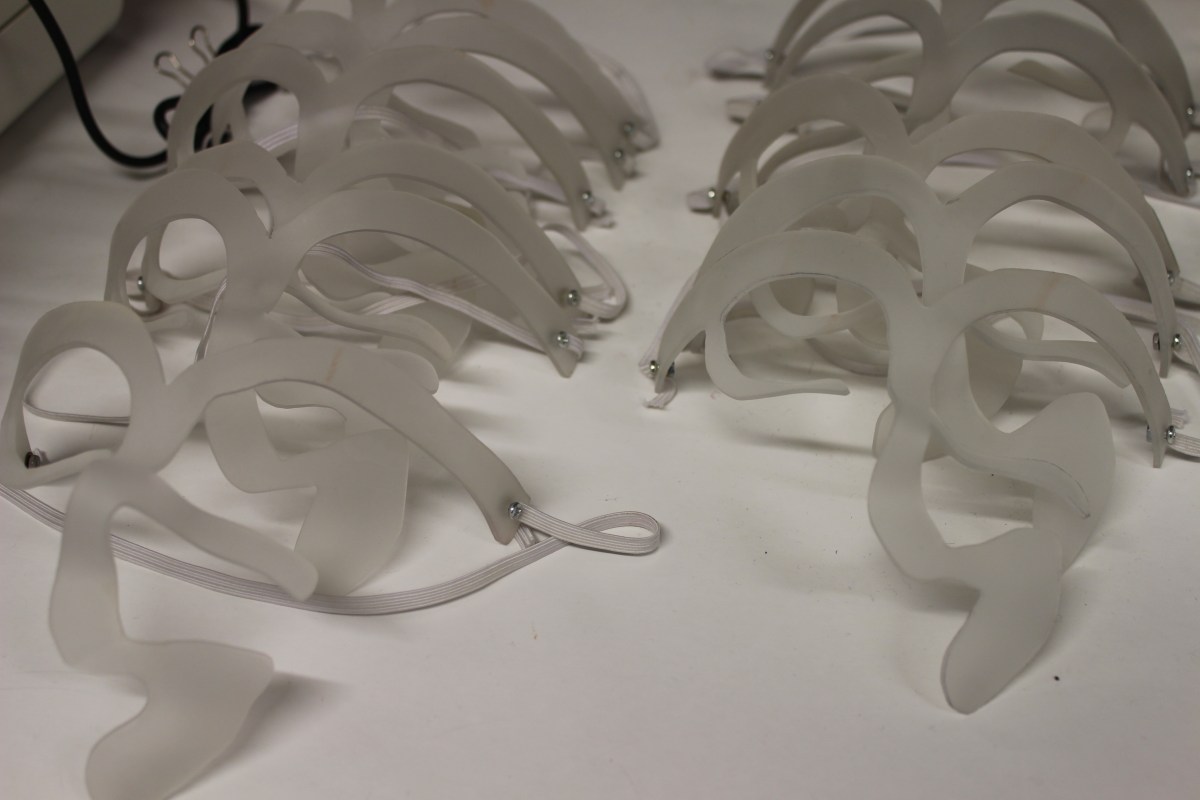
One of the teams decided to take a deeper look at mass surveillance in public spaces and how it could be disrupted. Fivos Avgerinos, Riya Gokharu, Wonji Jeong, Erin Liu and Anastasiya Vodolagina created masks that can ‘trick’ facial recognition software used in surveillance cameras, and in the process, help us question why we have become so accepting of mass surveillance in the first place.
What does the mask do, exactly?
Erin: “Biometric facial recognition works by mapping certain landmarks onto your face which are called nodal points, measuring the distance between the eyes, the width of the nose, the shape of the cheekbones and the shape of the jawline. The mask tricks facial recognition software into believing those landmarks are elsewhere, which gives them false results.” Continue reading “Musée des Refusés exhibition, MA Design Expanded Practice: Disrupting mass surveillance”


 Goldsmiths Design Blog