BA Design students Archie Harding, Panagiotis Tzortzopoulos and Raoni Saporetti have been chosen to design the trophy that will be awarded to the 2016 winner of the Goldsmiths Prize. Here are some photos of the team at work:
The Goldsmiths Prize for fiction was established in 2016 to reward innovative novels that break the mould and explore the possibilities of the form. This year’s nominees are:
Transit, by Rachel Cusk
Hot Milk, by Deborah Levy
The Lesser Bohemians, by Eimear McBride
Solar Bones, by Mike McCormack
Like a Mule Bringing Ice Cream to the Sun, by Sarah Ladipo Manyika
What’s it like to be a Design student at Goldsmiths? What can you expect from the course and the campus facilities? This past Saturday, 8 October, was a good day to find out, as Goldsmiths welcomed prospective students and their families for an Undergraduate Open Day.
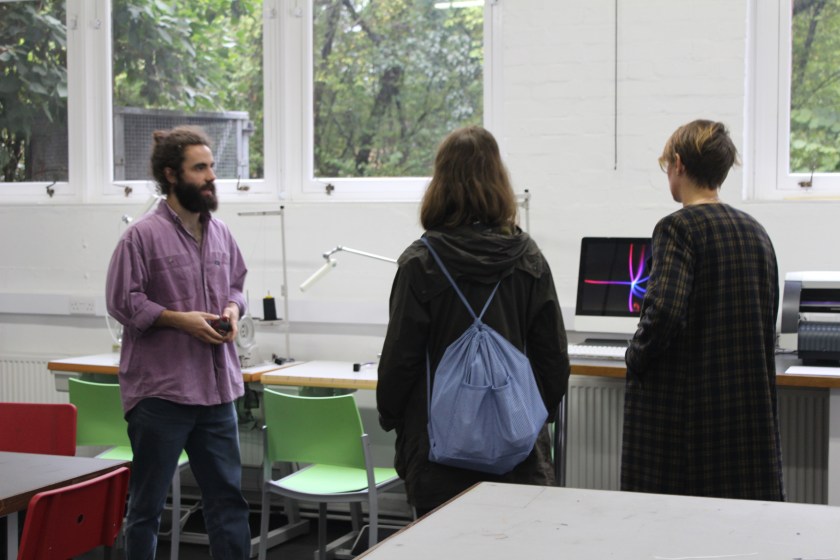
Technical tutor Charlie Evans gave visitors a tour of the workshop facilities
Early in 2016, a few alumni of the BA Design course at Goldsmiths visited the campus to talk to current students about their work and career paths. One of them was James Cuddy, co-founder of Six:Thirty alongside another Goldsmiths graduate, Roma Levin.
Six:Thirty is a creative agency whose tools are design and technology. “This gives us a broad remit for doing work which varies from branding and corporate identities to websites or interactive installations”, James explained. The name of the agency references its beginnings as an after-work project for the two founders, who were meeting up after their day jobs to develop their own ideas.
Out of Print, a project developed in collaboration with Goldsmiths Design students
Even though the work of Six:Thirty is diverse, what ties it all together is the approach to process: “We try to put as much research as possible into initial stages of a project, then we build something, we iterate it and we test it again. And we take some learning from that process to and develop final outcomes. This approach is great, because you can apply it to any project.” Six:Thirty clients include large companies as well as small start-ups such as Primo, a crowd-funded play-set which teaches children about the fundamentals of coding.
Whilst doing commercial work, the Six:Thirty team carry on their own self-initiated projects as well: “There is a spirit of trying to push things, to make new interesting work as opposed to just paying the bills”. James told current Goldsmiths students the story of the first Six:Thirty project, “Collate”, an installation exhibited at the V&A as part of the London Design Festival. “The project was a response to how consumption of information has become a much more active experience. Online – anyone can be a creator, and anyone can publish new content instantly.” Collate translated this process of collaborative publishing into a physical gallery space; visitors could work together on different stages of creating and publishing a book.
James also talked about a recent Six:Thirty project which continued their interest in our relationship with technology: “Unread Messages” (exhibited at the Aram Gallery from 11 March to 9 April) explored the influence of technology on mental wellbeing. The research stage of the project collected information from participants in an online forum that ran for three weeks. Conclusions were then organised around three core themes: The Curated Self (about the demands of crafting online personas), Compulsive Behaviours (about the addictive tendencies of digital communication), and Empowered but Dependent (about over-relying on these new means of communication). Eight designers from around the world were briefed to come up with responses to the themes.
Projects like Unread Messages are creative and exciting, but reconciling creativity with commercial imperatives is a balancing act, and James admits it’s something the team is still learning as they go along: “The thing to crack, to get everything working together, is to get the work that you’re really interested in to pay”. Projects that pay well and those with lower budgets must eventually become symbiotic in order to generate more commissions, as clients “want to see that you’ve done the work that they need before they’ll commission you for it.”
Unread Messages
As with the other talks in this format, James offered a few words of advice and guidance derived from his own experience. “Make sure you carry on learning, and that can be in many different ways, it doesn’t have to be just in a design context. I found that the times you learn the most is when you’re not in your comfort zone”. Running a small business, in particular, is a learning experience, especially on the financial and project management side of things: “The most difficult stuff isn’t always design related, so when you’re spending time on creative tasks you really appreciate the challenges this presents. It also makes you realise the context of everything that goes around design work, and it’s surprising how much that influences final outcomes and what can be produced.”
Like many others Goldsmiths Design alumni, James also highlighted the importance of collaboration. He advised current students to reach out to students from other fields, or to businesses that are looking for design skills. “Collaboration really makes you refine your ideas. To put something down on paper and then be confident enough to share it with other people forces you to think: actually, is this something I believe in? Is this going to work, what will they think about it? And this process is really helpful in the design aspects of what you do, and also in terms of realising a projects value in a wider context.”
Early in 2016, the Design department invited a few of its graduates to speak about their career paths after graduation and the challenges they encountered. One of the speakers was Ilyanna Kerr (BA Design 2013), co-founder of the social enterprise See What I Mean, which originated in a final year project at Goldsmiths.
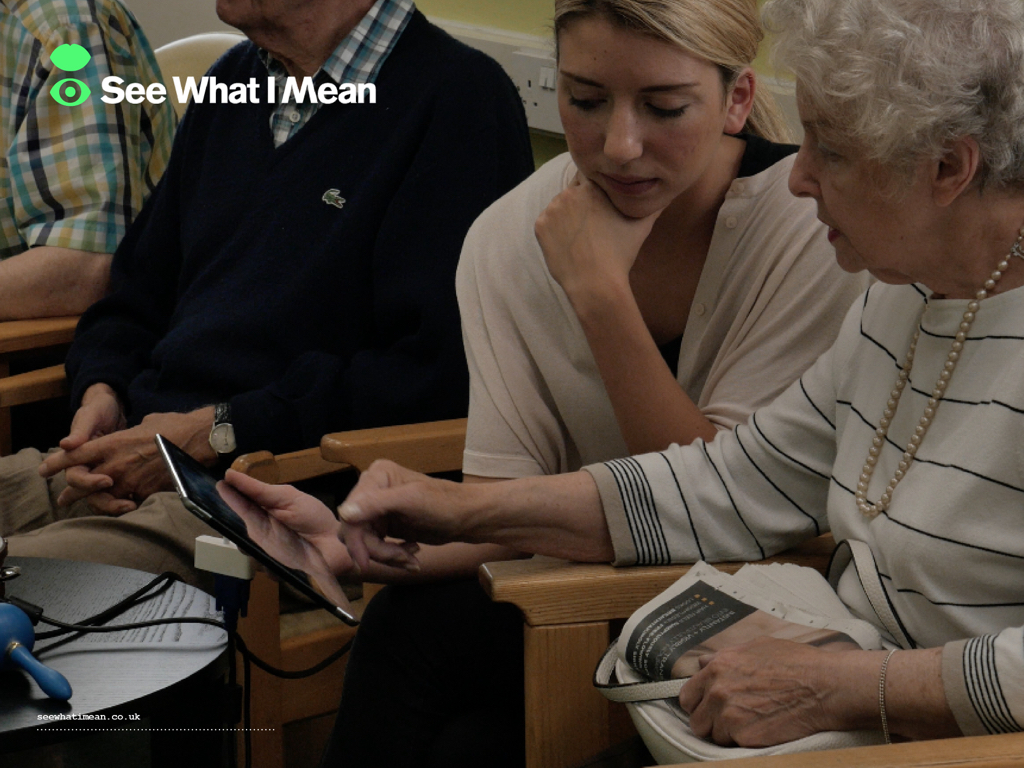
See What I Mean is “a speech to image communication tool for people living with dementia and their carers”. Ilyanna was able to grow this idea into a start-up with funding from Bethnal Green Ventures, a company supporting initiatives that pursue both social and financial returns. The project developed from her dissertation, which “looked at the way language changes the neurological makeup of our brains, and how that affects perception and our understanding of the world.” After many experiments and tests, and with the help of Goldsmiths Design tutor Peter Rogers, the result was an app that associates images to spoken words. Ilyanna decided to use the software to help people who are living with dementia, and she applied for funding to Bethnal Green Ventures after attending a presentation on campus at Goldsmiths. Continue reading “Goldsmiths Design career talks: Ilyanna Kerr, See What I Mean”




 Goldsmiths Design Blog